TYR Special Ops 3.0 Polarized
TYR Special Ops 3.0 Polarized Review (2026): Best for Open Water?
Open-water-specific goggles with polarized lenses, wide peripheral visibility, DURAFIT seals and Speed Adjust straps. We weigh the sun-glare benefits against fit variability, strap complaints and the premium reference price.
Read our verdict
THE TRIATHLONLOOP VERDICT
The bottom line.
A strong candidate for bright open-water triathlon swims when the frame fits. Polarization and wide vision address real needs, but mixed buyer feedback about fit and strap adjustment prevents an unqualified recommendation.
Read the evidence, check compatibility and compare the final local price before choosing.
WHAT WORKS
- Polarized lenses help reduce bright surface reflections
- Wide peripheral vision designed for open-water sighting
- Soft DURAFIT silicone gaskets
- Speed Adjust system can simplify setup
- Purpose-built for triathlon and open-water sessions
WHAT TO CONSIDER
- Mixed independent buyer feedback on overall fit
- Some customers report strap-adjustment slippage
- Integrated bridge limits individual adjustment
- Polarized lenses can be too dark in low light
- Higher US reference price than non-polarized versions
This article distinguishes manufacturer claims, independent published tests and our editorial assessment. Research-based reviews do not imply first-hand testing by TriathlonLoop.
Where to buy TYR Special Ops 3.0 Polarized
Available retailers in
Prices, availability and eligible delivery regions may change. Check the final offer at the retailer. Disclosure: Links in this directory are affiliate links. We may earn a commission if you purchase through them, at no extra cost to you.
The TYR Special Ops 3.0 Polarized is designed for the moment pool goggles become inconvenient: sunny lakes, choppy sea swims and open-water triathlon starts. Polarised lenses aim to reduce reflected surface glare, while TYR's wide peripheral lens layout, soft DURAFIT silicone gaskets and Speed Adjust strap system emphasise visibility and stability. Those are meaningful features for an open-water swimmer—but they do not automatically guarantee a good seal or better value than a simpler pair. [1]
TriathlonLoop editorial verdict: 8.0/10 for bright open-water swimming. We like the practical concept: glare filtering, reasonably broad visibility and a comfort-oriented seal in a triathlon-focused goggle. The more important caveat is mixed buyer feedback on fit and strap stability, plus the premium $55 reference price. This article is an evidence-based research review, not a hands-on trial by TriathlonLoop.
TYR Special Ops 3.0 Polarized specifications
For clarity, this review covers the adult Special Ops 3.0 Polarized Non-Mirrored model, SKU family LGSPL3P. TYR also sells non-polarized 3.0 models and older Special Ops 2.0 variants. Product names are similar, but optical features and pricing are not interchangeable.
| Feature | Special Ops 3.0 Polarized | Why it matters |
|---|---|---|
| Lens type | Polarized, non-mirrored | Targets reflected glare on bright water rather than relying on tint alone. |
| Peripheral vision | Wide peripheral range (manufacturer description) | Useful for observing buoys and other swimmers with less head movement. |
| Gaskets | DURAFIT hypoallergenic silicone | Designed for a comfortable, stable seal around the eyes. |
| Nose fit | Integrated bridge | One frame geometry, rather than interchangeable bridge sizes. |
| Strap | Speed Adjust technology | Designed for faster length adjustment; needs a slip test. |
| Anti-fog | Embedded anti-fog treatment | Helps initial lens clarity but is not permanently fog-proof. |
| UV | Built-in UV lens protection | Relevant for outdoor swim sessions; confirm exact model labelling. |
| Available colours | Smoke/Black, Blue, Amber/Navy | Light transmission and colour perception can differ. |
| Reference price | US $55 MSRP | Premium versus the non-polarized $45 3.0 model. |
The 2026 TYR equipment catalogue lists the model and its advertised feature set. We have not independently verified lens polarisation percentage, UV transmission, gasket pressure or drag. [2]
Do polarized swim goggles actually help in open water?
Yes, in the right conditions. Light bouncing off the surface of a lake or sea can produce intense glare. Polarised lenses filter part of that horizontally reflected light, potentially helping you distinguish a buoy, shore marker or swimming partner from reflections. For athletes who race under bright sun, glare management can make sighting feel more controlled.
The benefit is not universal. Polarised or heavily tinted lenses can reduce the amount of useful light reaching your eyes when swimming at dawn, under dark cloud or in a shaded indoor pool. And polarisation does not eliminate haze, choppy-water distortion or the need to lift your eyes high enough to sight a buoy.
Which lens should you race in? Bright sunshine and reflective water favour polarised lenses. Dark, overcast or indoor swims often favour clear or lighter-tinted lenses. Bring two well-tested pairs if the forecast is uncertain.
For a deeper explanation of tint choice, visit our triathlon goggles guide. It covers lens colour, sealing and race-day backup strategies.
Peripheral vision and sighting
TYR markets the Special Ops 3.0 with a wide peripheral range. That is relevant to triathlon because you need awareness of other swimmers, buoys and course direction while maintaining a rhythm. The glasses have a larger, more open-water-oriented feel than tiny Swedish racing goggles, although the actual field of view will depend on how the frames sit on your face.
We would not interpret the wide-view feature as a reason to skip open-water technique. Lifting the eyes slightly before breathing, sighting every few strokes and choosing an appropriate target matter more than a small difference in lens geometry. An efficient swimmer can still lose time by repeatedly swimming off course.
DURAFIT gaskets, seal and long-swim comfort
The soft silicone gasket is one of the central attractions. TYR designed its DURAFIT material to create a secure seal without a harsh competition-frame feel. Some swimmers may find that ideal for a continuous 1.9 km or 3.8 km event, particularly if ultra-low-profile goggles routinely leave pressure marks.
But the integrated bridge will not suit every face shape. You should be able to press the goggles gently into place and feel a temporary seal without the strap. If the bridge pulls the cups too close or too far apart, a tighter strap might simply create discomfort without fixing leaks. In that case, a model with interchangeable bridges—such as Speedo Vanquisher 3.0—could be more adjustable.
SwimOutlet buyer feedback is genuinely mixed for the adult Polarized Non-Mirrored model. Its listing showed a roughly 3.5/5 average from 28 reviews when checked, including both enthusiastic fit reports and several dissatisfied ratings. That is materially weaker than the more uniformly favourable feedback on some conventional training goggles. Ratings change, and customer reviews are self-selected, but this is a reason to treat fit as an important buying risk. [3]
Speed Adjust: convenience versus strap slipping
The rear adjustment system is intended to allow fast changes to strap tension. That is useful when a silicone cap or wetsuit hood alters the position of the strap, or when you have to make a quick adjustment before entering the water.
However, a few buyers have complained that the adjustment mechanism can loosen, especially when putting the goggles on or making forceful entries. A review on the manufacturer's own site specifically raised this concern, and an REI buyer reported similar behaviour. These are individual reports—not proof of a universal defect—but they justify testing the strap security before your most important swim. [1] [4]
Before a race, set the strap tension, put on your race cap and complete several starts or strong push-offs in practice. If the band shifts, the goggles leak or the strap slips each time you pull it on, resolve that problem before race morning. There is no benefit in fighting your gear through the opening 400 metres.
Anti-fog performance and care
TYR includes an embedded anti-fog treatment, but we have not found a controlled independent measurement of its longevity. One SwimOutlet review reported confusion about fogging performance, while other users found visibility acceptable over regular swims. This inconsistency is typical of coatings that can be affected by cleaning, water temperature, facial oils and use. [3]
After swimming, rinse in cool fresh water, avoid touching the inner lens and allow the goggles to dry out of direct sunlight. Do not scrub the coating or borrow the swipe-to-reactivate method marketed for the Arena Cobra Ultra Swipe; TYR does not specify that procedure for this model.
Are TYR Special Ops 3.0 good for triathlon?
They are a logical contender for sunny open-water events if they fit securely. The optics target a real triathlon problem—surface glare—and the broader peripheral field and soft silicone gaskets make more sense for a long lake swim than a tiny racing lens for many age-group athletes. This makes them especially relevant to outdoor training and sprint, Olympic and 70.3 races.
For a full-distance swim, the priorities shift further toward comfort and reliability. Test the pair in water resembling your event, including waves, sighting, cap placement and a continuous long swim. If you race in low light or a shaded venue, a clear pair might be the better option despite the polarised technology.
For new triathletes, do not assume buying a $55 goggle replaces practising open-water sighting. See our open-water swimming guide for race-readiness and safety guidance.
Special Ops 3.0 Polarized vs Speedo Biofuse 2.0 vs Vanquisher 3.0
| Decision | TYR Special Ops 3.0 Polarized | Speedo Biofuse 2.0 | Speedo Vanquisher 3.0 |
|---|---|---|---|
| Primary strength | Sunny open water and glare control | Comfort in regular training | All-round pool performance |
| Lens type | Polarized standard on reviewed version | Standard varies; polarized variant sold separately | Clear and mirrored versions |
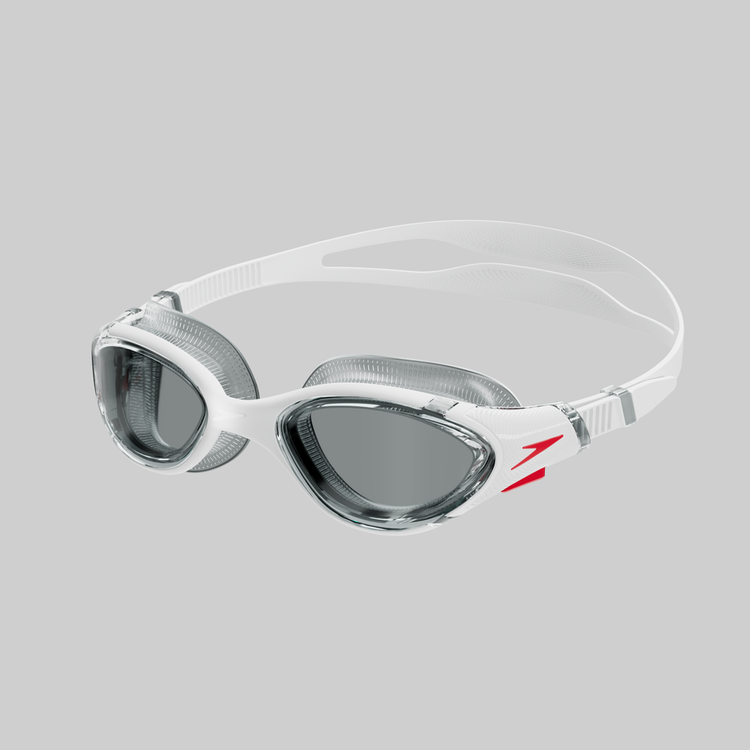
| Gasket | DURAFIT soft silicone | Soft, comfort oriented | Compact Cushion Fit |
| Bridge | Integrated | Integrated | Four adjustment options |
| Reference pricing | $55 MSRP | About $38 | Lower-cost performance tier |
| Our pick | Bright open water if fit is good | Long pool and aerobic sessions | Mixed training and pool races |
See our full Speedo Biofuse 2.0 review and Vanquisher 3.0 review for more on the alternatives.
Is TYR Special Ops 3.0 Polarized worth $55?
For someone who often swims in bright reflective conditions, potentially yes. The optical feature addresses a specific need and can be worthwhile if your current goggles make buoy sighting or following swimmers difficult. TYR lists an MSRP of $55 for the polarized version versus $45 for the non-polarized adult version. Retailer discounts can change, and some shades may be priced differently. [2]
However, the mixed retail feedback and occasional strap complaints mean this is not an automatic buy. If you primarily swim indoors or can test a $25–$40 pair that fits securely, the extra expense may not deliver a meaningful advantage. Choose the goggle that feels stable when wet—not the one with the longest feature list.
TYR Special Ops 3.0 Polarized: frequently asked questions
Are TYR Special Ops 3.0 goggles designed for triathlon?
Yes. TYR markets them for triathlon and open water. The polarized version is especially relevant to bright conditions with surface glare.
Are the lenses mirrored?
This review covers the polarized, non-mirrored adult version. Polarization and mirror finishes are different optical features.
Will polarized goggles help in cloudy weather?
They may help with certain reflections, but a tinted lens can feel too dark in low light. Keep a clear or lightly tinted alternative for shaded or overcast sessions.
Do TYR Special Ops 3.0 goggles have adjustable nose bridges?
The reviewed adult model has an integrated bridge. Prioritize face fit; compare a replaceable-bridge design if needed.
Do users report strap slipping?
Some buyers have reported that the adjustment mechanism loosens. Other users are satisfied. Test the exact pair during hard starts and open-water practice.
Are they anti-fog?
Yes, the manufacturer advertises an embedded anti-fog treatment, but it is not permanent. Avoid rubbing the inside of the lenses.
Is Special Ops 3.0 Polarized better than Biofuse 2.0?
For bright open water, its polarized optics may justify the premium. For everyday pool comfort, Biofuse 2.0 is generally the more directly targeted design.
Review methodology and sources
Research-based editorial review. We used TYR's published technical specifications, the TYR 2026 catalogue, SwimOutlet customer ratings and additional user feedback on TYR and REI. We did not perform our own pool or open-water fit testing, measure polarization or evaluate long-term durability. Our 8.0/10 editorial score reflects the useful outdoor feature set alongside real fit and strap concerns. Featured image is retailer product photography for model identification.
- TYR US — Special Ops 3.0 Polarized Non-Mirrored; official positioning, DURAFIT and lens technology.
- TYR Spring/Summer 2026 catalogue; LGSPL3P model, specifications, colours and reference MSRP.
- SwimOutlet — TYR Special Ops 3.0 Polarized; price, retailer customer rating and customer comments.
- REI — TYR Special Ops 3.0 Polarized; third-party retailer specifications and buyer feedback, including strap adjustment concerns.
- GearJunkie — Best Swimming Goggles 2026; independently tested category context including TYR Special Ops 3.0.
Related: Speedo Biofuse 2.0 Review · Arena Cobra Ultra Swipe Review · Triathlon Goggles Guide · Open-Water Swimming Guide.